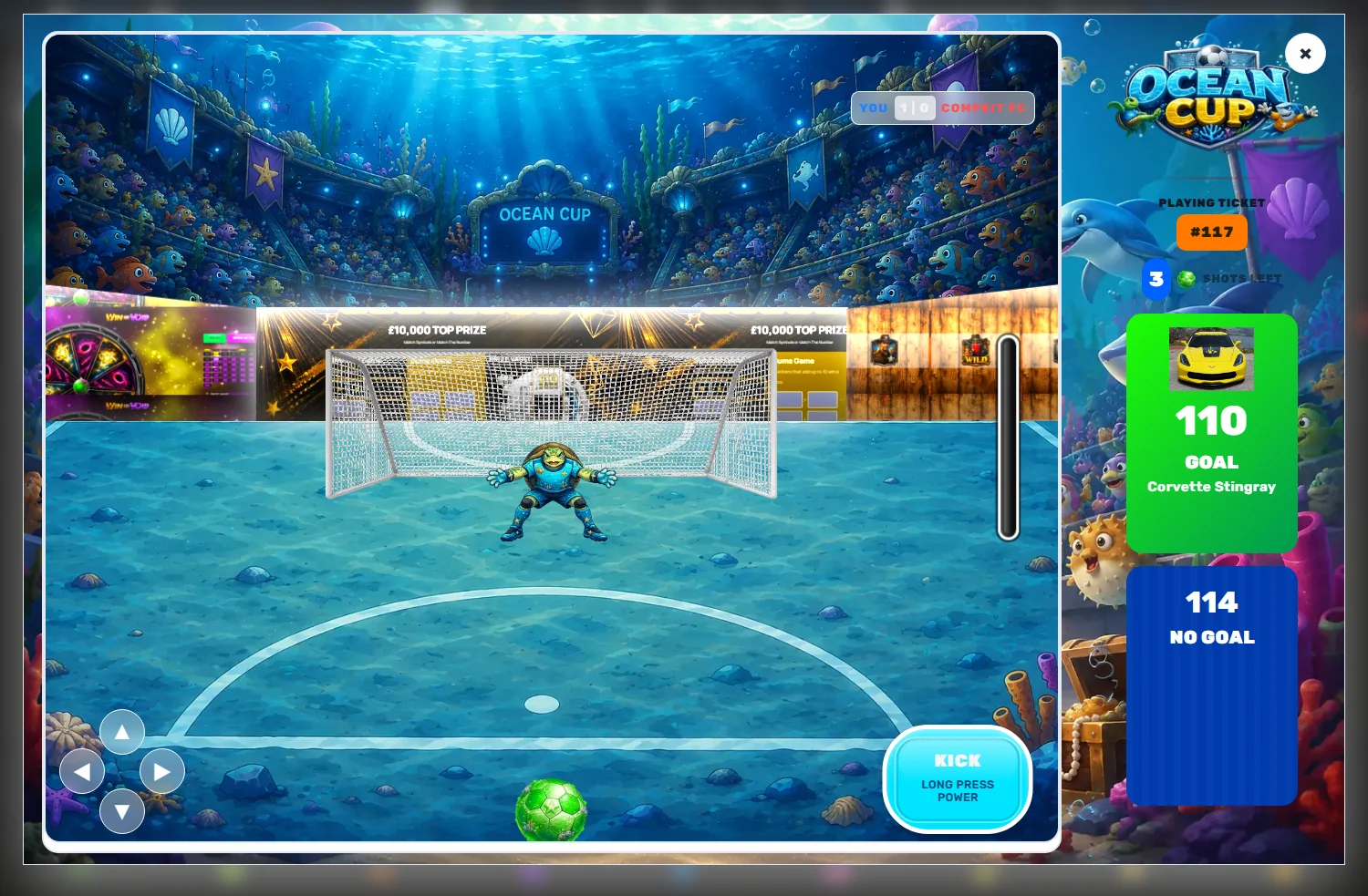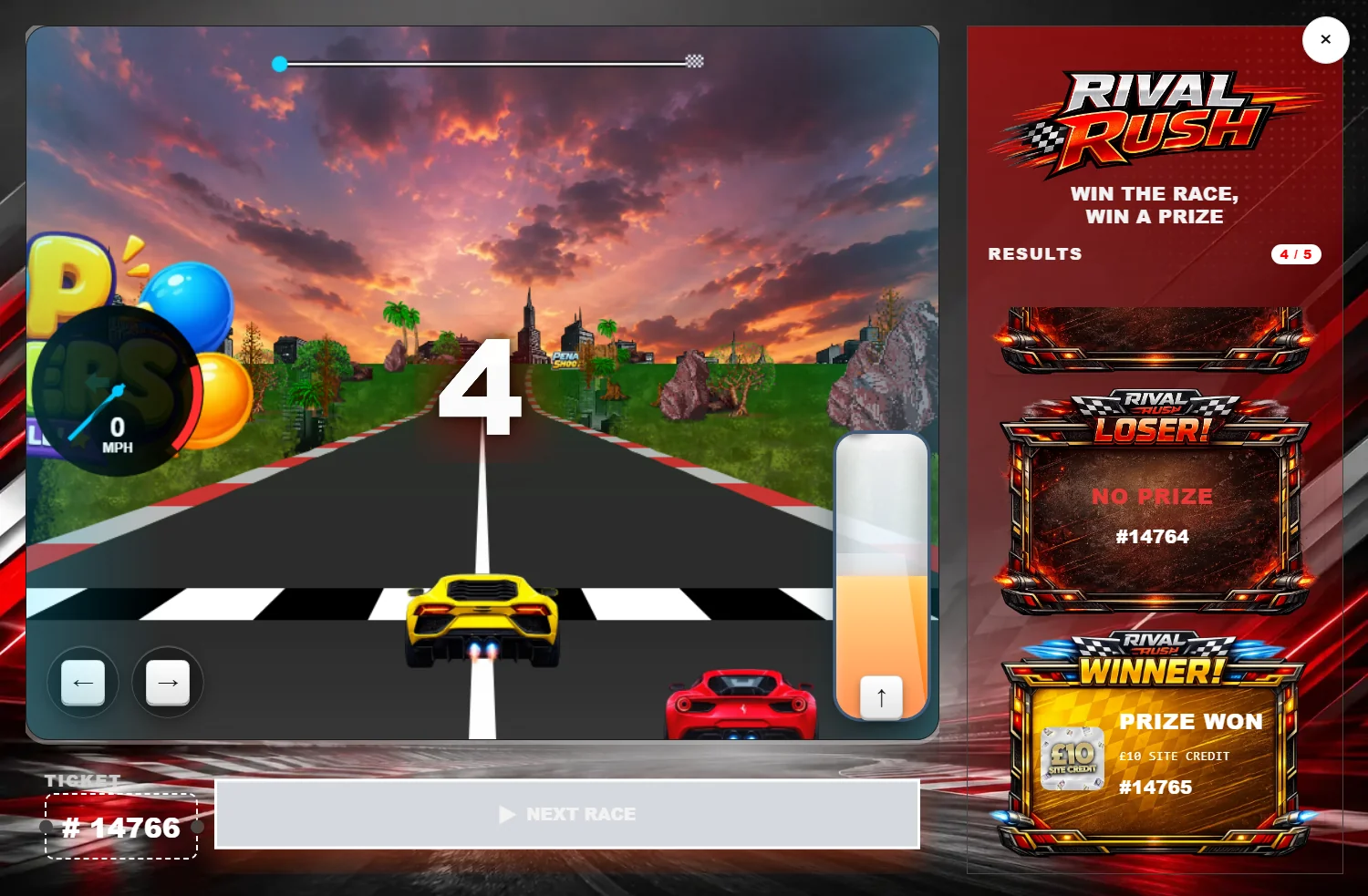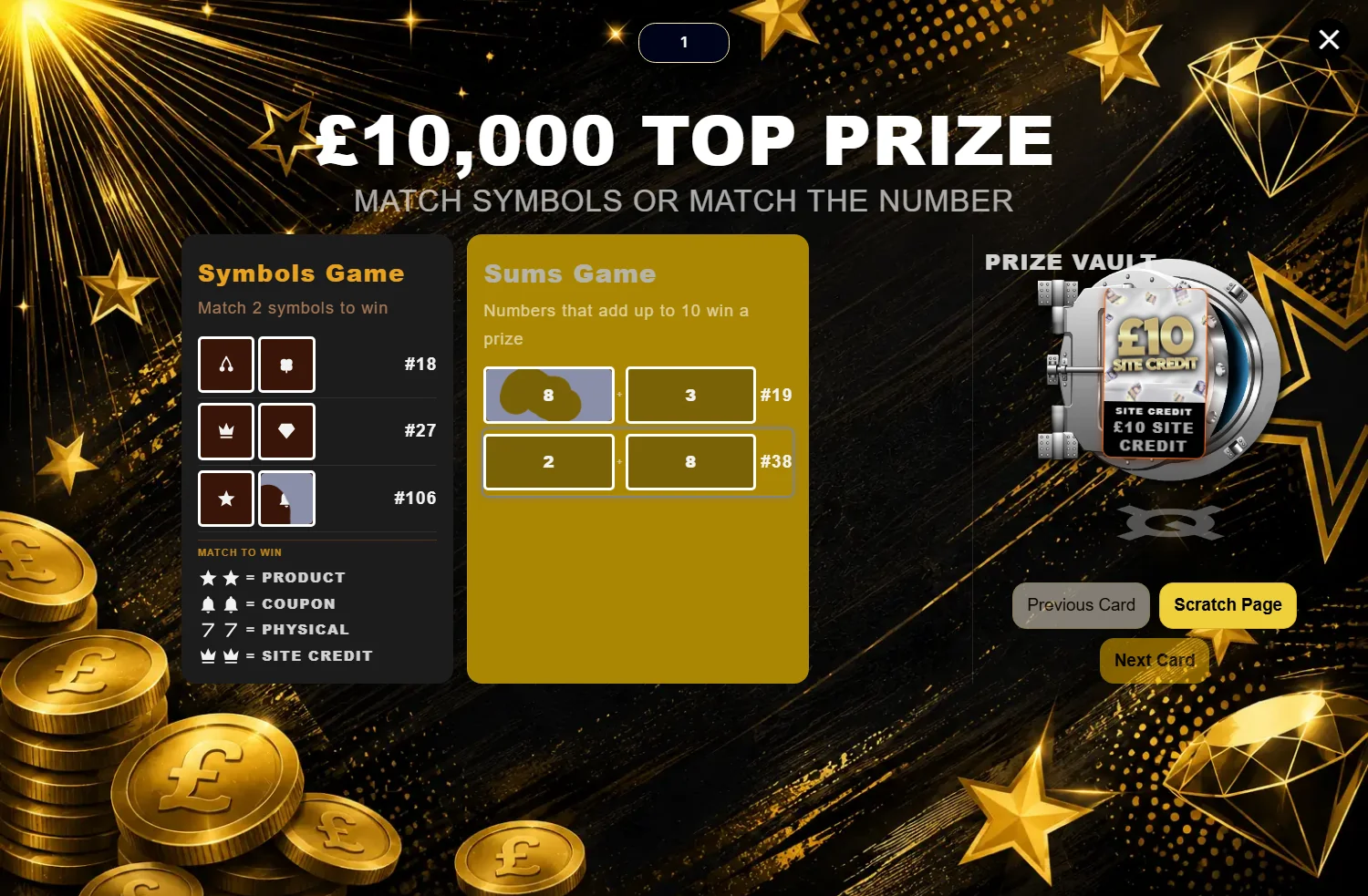
Sound is the setting people feel most strongly about and think about least. It tends to get switched on because it is there, or switched off because somebody once had a bad experience with an autoplaying video, and neither is a decision.
The case for it
A reveal is a moment of anticipation followed by a resolution. Sound is unusually good at marking both. Reels spinning, a claw descending, a dart landing — audio tells you something is happening and then tells you it has finished, without occupying any screen space on a device that has none to spare.
The win sound in particular does real work. It converts a visual change into a felt event, and it is the thing people remember about a reveal they enjoyed.
The case against it
Your entrant may be on the sofa at eleven at night with someone asleep upstairs, or at work, or on a bus. A sound they did not ask for is at best a surprise and at worst a reason to close the tab.
There is also the repetition problem. A charming effect on the first ticket is a charming effect on the second. On the fourteenth ticket of a twenty-ticket order it is a reason to mute the tab, and you have lost the audio for the win as well.
How browser autoplay rules actually apply
This is where most of the worry is misplaced. Modern browsers block audio that plays without user interaction — which is exactly the behaviour that gave sound a bad name in the first place.
A prize reveal is not affected in the way people assume, because the player clicks to start. Pressing Play, Spin, Drop or Throw is an interaction, and audio triggered after it is permitted. The game is not fighting the browser; it is doing the thing the rules were written to allow.
What you should not do is attempt sound before any interaction. Nothing in a reveal game needs to.
What is in a sound pack
Sound travels alongside the settings in a theme file, in its own block. Per game it is a small, deliberate set — a movement or action sound, a resolution sound, a win sound — each with a volume and the option to point at your own uploaded file instead of the shipped one.
It is a hand-maintained list rather than an open-ended one, which is a good thing: it means the sounds map to actual game events rather than being sprayed across every interaction.
An empty sound block is completely valid. Plenty of themes ship silent.
Settings that make it survivable
- Turn the volume down further than feels right. You are auditioning it in a quiet room, deliberately, having just built it. Your entrant is not.
- Keep effects short. Under a second for actions. Anything longer competes with the next ticket.
- Prioritise the win sound. If you only keep one, keep that. It is the one carrying emotional weight.
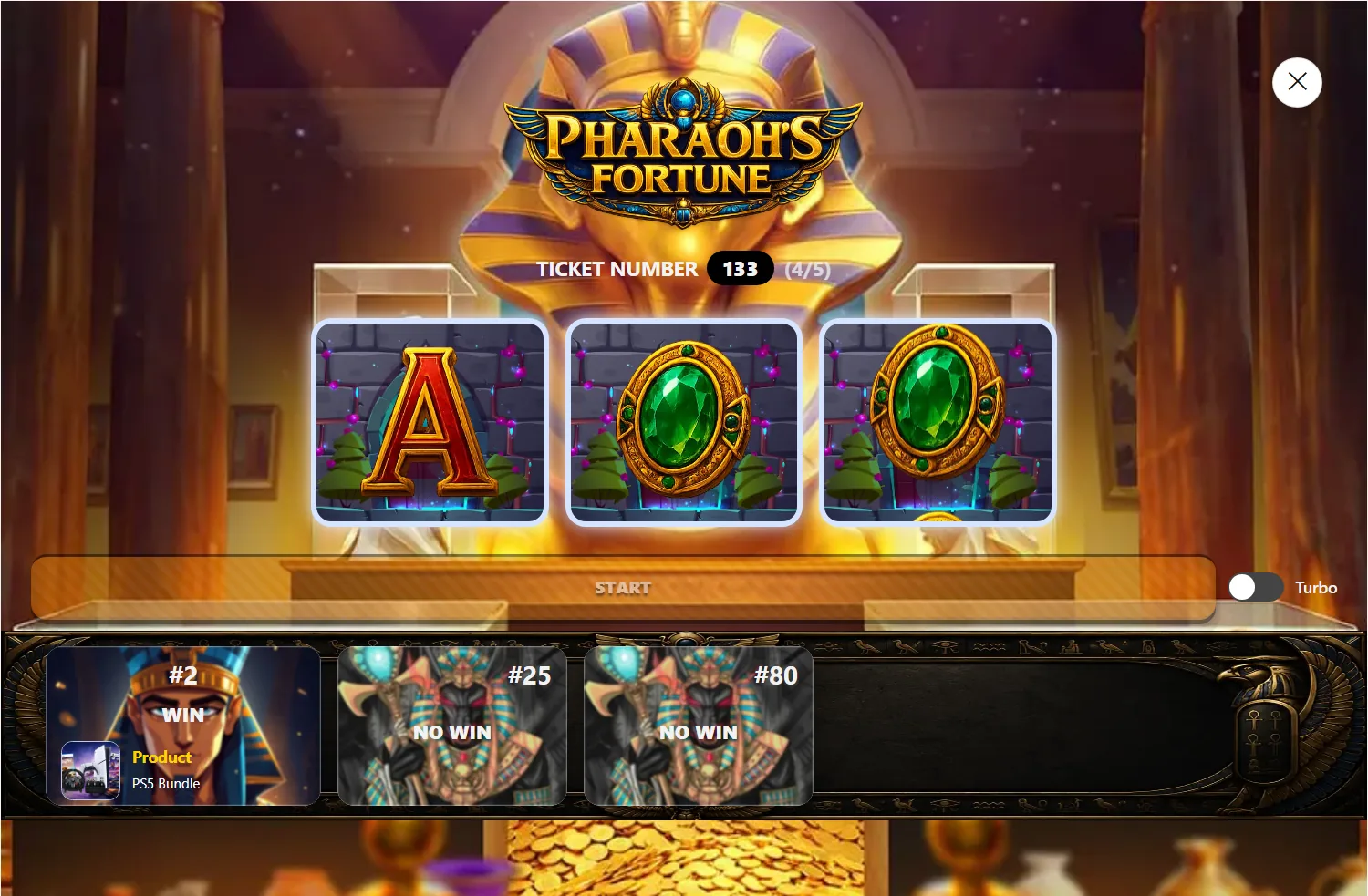
- Consider turbo modes. Where a game offers a fast-reveal mode for large orders, that is exactly the context where per-ticket audio becomes fatigue.
A reasonable default
If you do not want to think about it: quiet action sounds, a slightly louder win sound, nothing on a loss. Losses are frequent and a sound attached to one is a small punishment repeated many times.
And test it the way it will actually be used — on a phone, at low volume, on the eighth ticket of an order. Not once, on a desktop, with headphones on.