Competition operators tend to think about revenue in one dimension: ticket price times tickets sold, minus the prize. It is a reasonable model and it ignores an asset most sites already own — attention at the exact moment somebody is most engaged.
A prize reveal holds undivided attention for ten to thirty seconds. Nobody scrolls past it. Nobody blocks it. That is a rarer thing than it sounds.
The space already exists
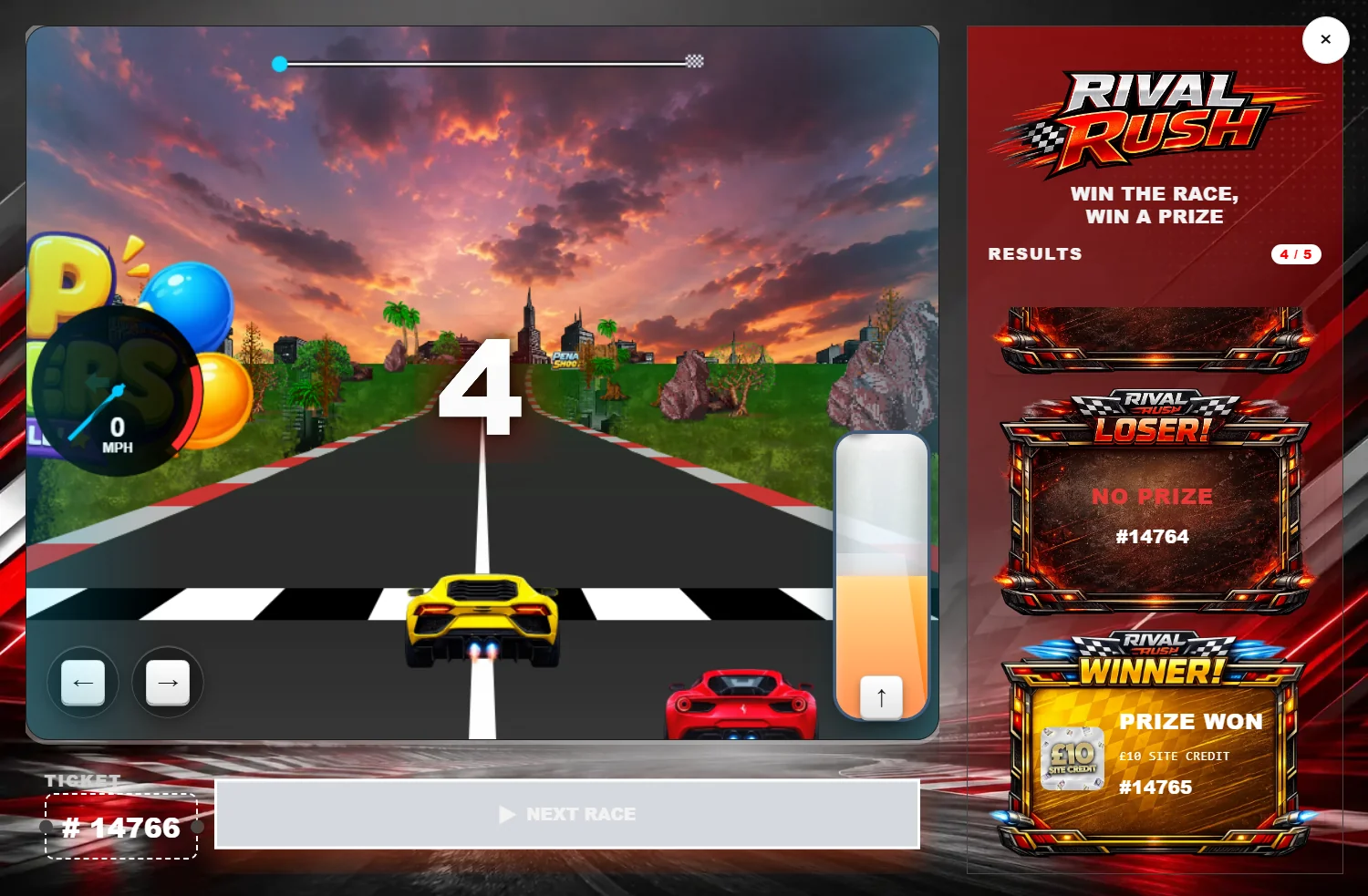
Two of the CompKit games ship with advertising surfaces because their real-world equivalents have them. Race Car has trackside boards. Football Shootout has hoardings around the pitch.
They read as part of the scene rather than as advertising bolted onto a game, which is precisely why they work. A branded board beside a racetrack is what a racetrack looks like.
Why per-product overrides matter here
Sponsorship is campaign-shaped, not site-shaped. You do not want a sponsor's logo on every draw you run forever — you want it on their draw, for the duration, and gone afterwards.
Because every game setting can be overridden on a single product, the boards are per-campaign inventory by default. Sell the same slot to a different sponsor every month and your house style is never touched. When the campaign ends, the product ends with it.
That is the difference between a feature and a business model.
What you are actually selling
Be precise with sponsors, because vagueness here leads to awkward conversations later. You are selling:
- Logo placement inside the reveal game for a named competition
- For the duration of that competition
- Seen by every entrant who plays a reveal — which, for an instant-win draw, is close to every purchaser
- At the highest-attention moment on your site
What you are not selling is impressions you cannot evidence. Do not quote a number you have not measured. Ticket sales for the campaign are a defensible floor, and multi-ticket orders mean plays typically exceed buyers.
Pricing it without guessing
Start from what the campaign is worth to you rather than from a rate card you invented. A workable first approach:
- Take your expected ticket sales for the campaign.
- Decide what a sponsor covering a meaningful slice of the prize cost is worth — often the prize is the real expense.
- Offer the board as part of a package: in-game placement, a mention in the campaign post, and the prize supplied or subsidised.
Sponsors who supply the prize are the easiest first deals. They get their product in front of a buying audience, you get your margin back, and the in-game board is the visible proof they paid for.
Keeping it tasteful
The reason in-game advertising is tolerated at a racetrack and resented on a web page is placement. Some rules that keep it on the right side:
- Never between the player and the result. Anything that delays or obscures the reveal turns a fun moment into an ad you sat through.
- Scene-appropriate. A board at the trackside works. The same logo floating over the play area does not.
- One sponsor, not four. Exclusivity is worth more to them and looks better to you.
- Say so. If a draw is sponsored, mention it in the product description. It costs nothing and it is the honest thing to do.
Do not forget the compliance angle
Sponsorship does not change your obligations around how a competition is run, advertised and judged. If a sponsor supplies the prize, be clear in your terms about who is responsible for fulfilling it — that is the one that causes real problems when it goes wrong. Our UK competition law basics is a starting point, not legal advice.